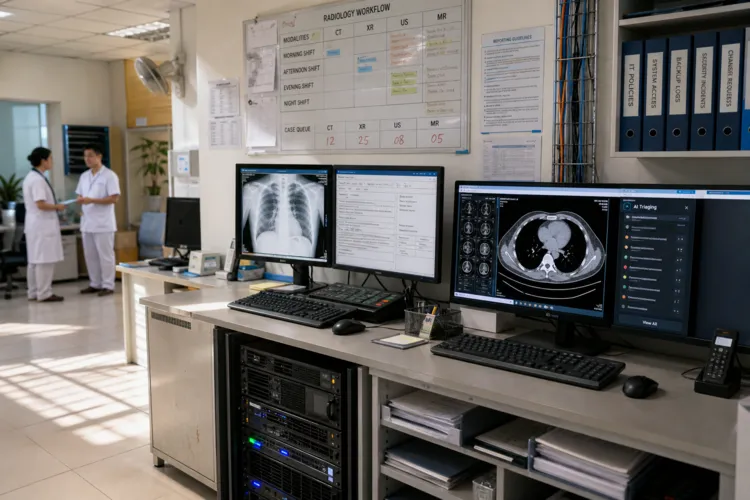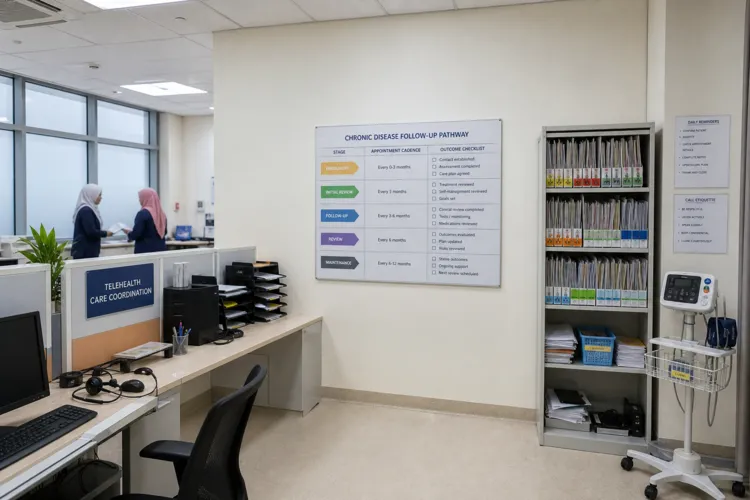

Indonesia’s push for more connected healthcare is increasingly tied to interoperability. A central example is SATUSEHAT, described as Indonesia’s national health data platform managed by the Ministry of Health (Kemenkes), designed as a centralized HL7 FHIR R4 server where hospitals push clinical encounter data. This approach gives technical teams a defined architecture and a specific subset of FHIR resources to implement, rather than requiring every possible resource. In practice, it shifts integration from ad-hoc interfaces to repeatable mappings and APIs that can be monitored over time for changes. The broader momentum is reinforced by government digitization mandates cited as market drivers, alongside the stated role of interoperability rules built around SATUSEHAT in lowering integration risk for providers.
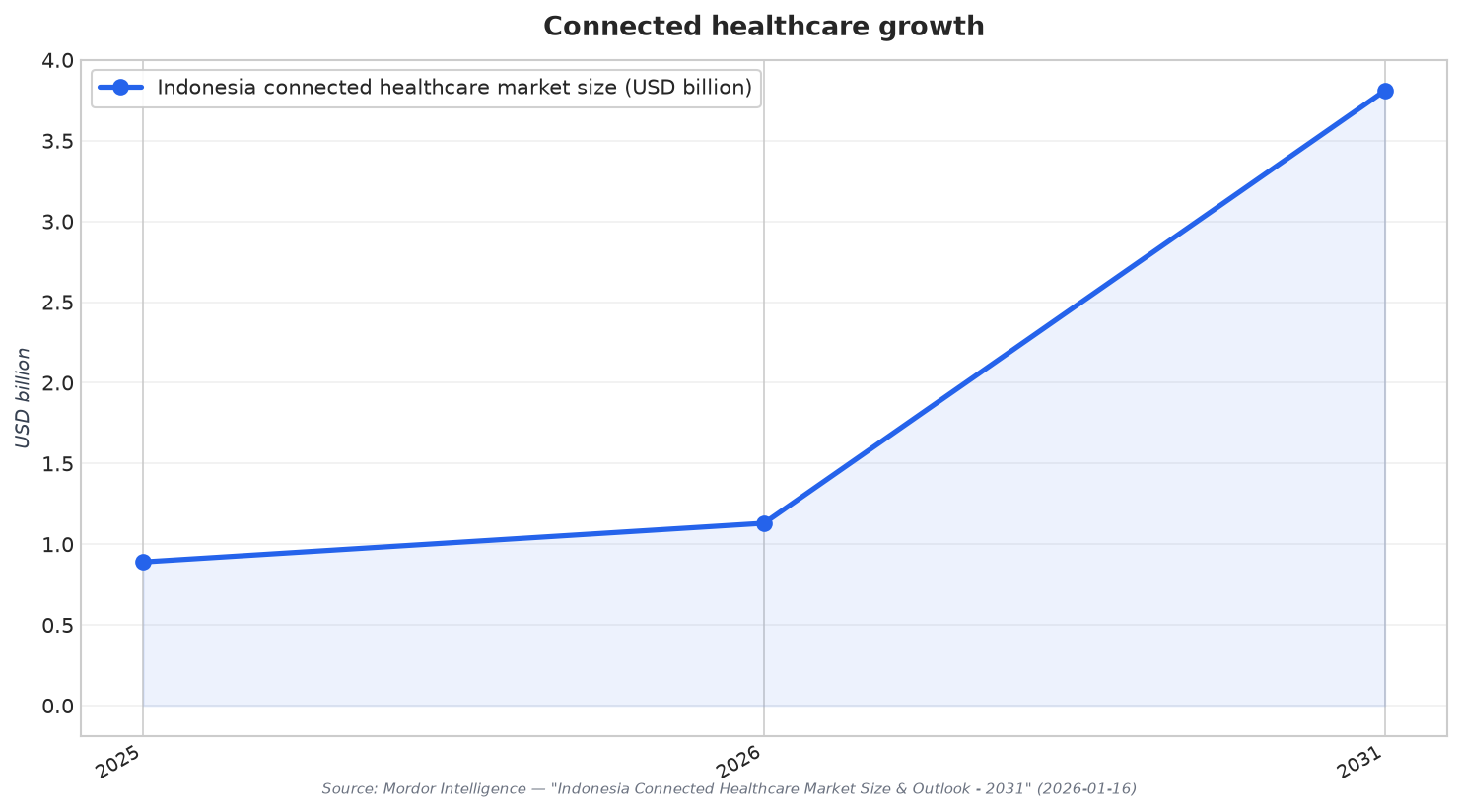
Signals from Indonesia’s digital health economy show why this standardization effort matters. Mordor Intelligence estimates the Indonesian connected healthcare market at USD 0.89 billion in 2025 and USD 1.13 billion in 2026, with a projection of USD 3.81 billion by 2031 at a 27.4% CAGR over 2026–2031. Within that market, cloud-based platforms captured a 64.90% share in 2025 and are poised for a 28.2% CAGR through 2031, aligning with integration models that benefit from standardized APIs. Hospitals also held a 45.20% share by care setting in 2025, while government and public-health agencies are identified as the fastest-growing end user group at a 28.6% CAGR to 2031. These figures frame why consistent data exchange matters across both provider operations and national reporting workflows.
Where Hospital EHR Adoption Meets National Interoperability
On the delivery side, Indonesia’s EHR landscape shows both progress and a gap that interoperability initiatives can help close. IndexBox describes Indonesia as having over 2,500 hospitals (about 60% private and 40% public) and more than 10,000 puskesmas as primary care gateways under the JKN programme. Adoption of advanced, interoperable EHR systems is estimated at roughly 30–40% of Indonesia’s hospitals, while adoption in puskesmas is still below 15%. The same source points to inconsistent interoperability standards across public and private facilities as a critical barrier, contributing to fragmented exchange and limiting national health information exchange efforts. This is where a single, national FHIR-based exchange can become a forcing function for more uniform data structures and predictable integration patterns.
Procurement and implementation realities make a shared standard even more valuable. IndexBox notes that budget constraints can slow procurement cycles and that a typical tender for a mid-range EHR system can face 6–12 month delays due to approvals. It also estimates import dependence at 70–80% for core hardware components and enterprise software platforms, creating supply chain exposure while highlighting opportunities for cloud-based solutions. Meanwhile, cloud-based and SaaS EHR deployments are expected to grow from about 20% of new installations in 2026 to over 50% by 2035. As hospitals digitize in phases, demand is also shifting toward modular, department-deployable solutions such as pharmacy, laboratory, and radiology. Standardized FHIR exchange can reduce rework when different modules and vendors need to interoperate with SATUSEHAT.
From a market lens, interoperability is not only an Indonesian story, but global growth underscores why vendors are investing in these capabilities. The Business Research Company puts the global healthcare data interoperability market at $7.33 billion in 2025 and $8.61 billion in 2026, with a forecast of $14.98 billion in 2030. In that report, North America was the largest region in 2025 and Asia Pacific is the fastest growing region, providing context for why implementations in Indonesia are happening in parallel with regional acceleration. Within Indonesia, vendors and hospital IT teams are also being pushed by procurement requirements to integrate with BPJS Kesehatan claims and payment systems, which IndexBox says is becoming a mandatory procurement criterion and is pushing vendors to enhance HL7 FHIR and open API capabilities. Together, these forces make FHIR Interoperability Indonesia a practical route toward more integrated national health data.
What is SATUSEHAT and how does it use HL7 FHIR?
How widely are interoperable EHR systems used in Indonesia today?
What market numbers suggest momentum behind connected healthcare in Indonesia?
How do cloud and SaaS trends affect Indonesia’s integration path?
What does the topic of FHIR interoperability in Indonesia mean in practice?