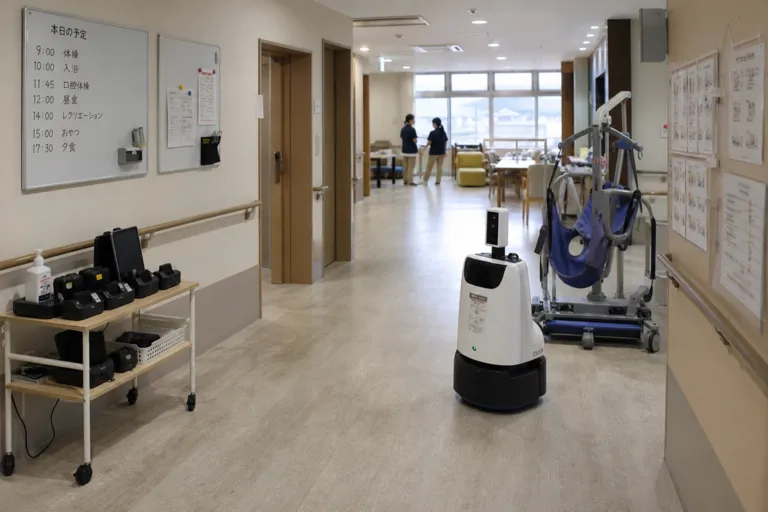
Robotic Elder Care Japan is increasingly defined by scale-up, not experimentation. Ken Research describes a market that now runs through direct equipment sales, distributor procurement, leasing, and recurring robotics-as-a-service contracts across nursing homes, dementia group homes, day-care centers, and assisted-living facilities. Demand is anchored by 6.9 million long-term-care-certified people in 2024-2025, which sustains recurring needs such as transfer support, fall detection, rehabilitation, and cognitive-care technologies. While facility procurement is nationally distributed, supplier innovation is concentrated around industrial clusters in Kanto, Chubu, and Kansai. Ken Research notes that at least 6 of the 10 profiled suppliers are headquartered in Tokyo, Ibaraki, or Aichi, supporting faster iteration and channel development even as buying remains fragmented across facilities.
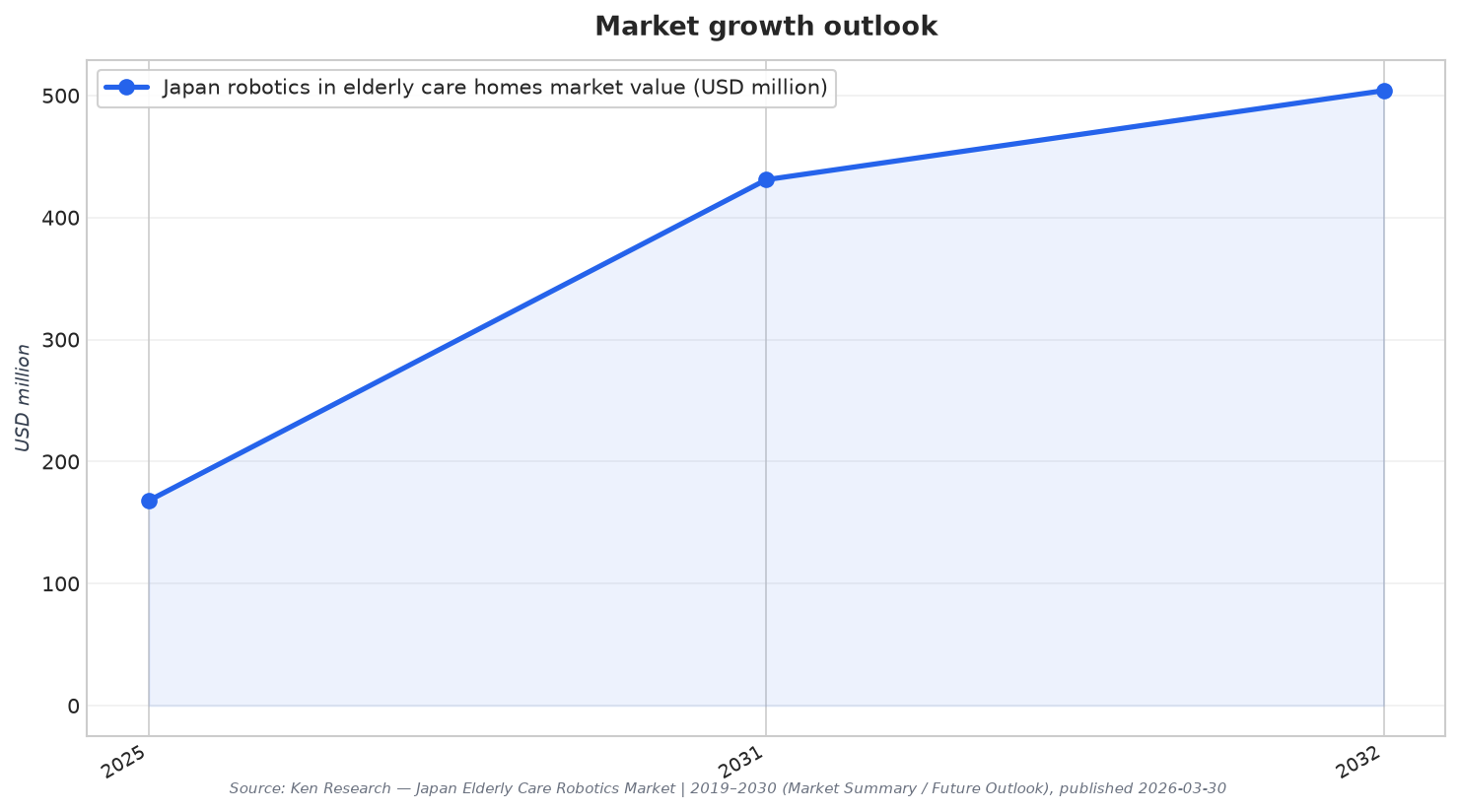
That shift is visible in both value and deployment volume. Ken Research values Japan’s robotics in elderly care homes market at USD 168 million in 2025, with transfer and lifting robots listed as the dominant segment that year. The same source forecasts growth to USD 504 million by 2032, implying a 17.0% CAGR from 2025 to 2032, after an estimated 13.3% CAGR during 2020-2025. The report also frames an adoption checkpoint of USD 431 million in 2031. On the operational side, deployment volume is projected to rise from about 9,500 units and systems in 2025 to roughly 30,263 by 2032, or about 18.0% annual volume growth. Average selling price is expected to ease from around USD 17,684 per unit or facility system to about USD 16,654 by 2032, as lower-priced monitoring technologies capture more deployment volume.
AI Platforms and Services Push Adoption Past One-Off Trials
AI-enabled platforms are also becoming a practical pathway from pilot projects to multi-site rollouts. Ken Research values the Japan AI in elderly care robotics platforms market at USD 109 million in 2025 and projects it will reach about USD 358 million by 2032, a forecast CAGR of 18.50%. It also estimates a 2031 value of about USD 302 million. Platform volume is projected to grow from around 7,280 systems in 2025 to approximately 19,365 systems by 2032, reflecting roughly 15.0% annual unit growth. The same report links commercialization strength to Japan’s broader automation base, citing about 450,500 operational industrial robots in 2024 and 44,500 units installed during 2024. In this framing, value growth can outpace unit growth as suppliers capture more software, analytics, integration, maintenance, and managed-service revenue per deployment.
Several sources describe drivers that make recurring procurement more likely than one-time trials. Ken Research reports Japan had 36.19 million people aged 65 and above in 2025, equal to 29.4% of the population, which supports ongoing demand for labor-saving and safety-enhancing care technology. TheReportCubes adds that Japan’s robotic nurses market is valued at USD 210 million in 2026 and is set to reach USD 480 million by 2034, at a 21.3% CAGR from 2026-2034, and it highlights expanded use in home care as well as institutional settings. The same source says these robots are widely deployed in nursing homes and help reduce caregiver workload by up to 30%. It also cites policy direction through the Japan Nursing Care Robot Development Program (2025) and the Society 5.0 Healthcare Strategy (2026), plus a 2025 expansion of SoftBank Robotics’ Pepper deployments in eldercare facilities focused on companionship, exercise guidance, and engagement.
Zooming out, other benchmarks underline why Japan is treated as a major center of gravity for elder care robotics. Future Market Insights reports that the eldercare-assistive robot industry in Japan holds a 64.1% share in 2025 within its East Asia industry analysis, and it expects sales in Japan to rise at a 14.8% CAGR over the next ten years (2025-2035). Separately, a global comparison from DataIntelo values the global elder care robotics market at $8.7 billion in 2025 and projects $28.4 billion by 2034, a 14.8% CAGR from 2026-2034. Taken together with Japan’s market forecasts, unit growth expectations, and the spread of subscription and managed-service models, the story is less about isolated demos and more about robotics becoming a standard procurement category across care settings.
What shows that Robotic Elder Care Japan is moving beyond pilot facilities?
How large is Japan’s robotics market in elderly care homes, and what is it forecast to become?
How fast are deployments expected to grow in Japan’s elderly care homes robotics market?
What is the outlook for AI-enabled elder care robotics platforms in Japan?
Which segments are emphasized in facility adoption?