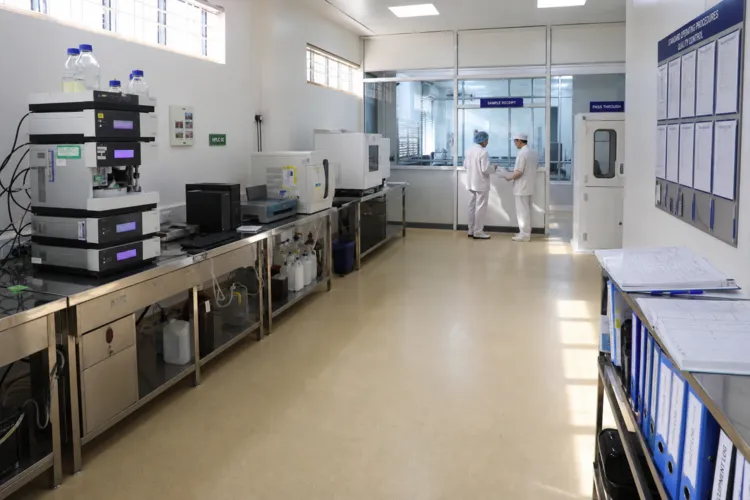
AI Diagnostic Imaging India is increasingly framed as a practical response to access gaps, not a luxury add-on. India has 64 doctors per 100,000 people, compared with a global average of 150, and this shortage shapes how new tools are adopted. In diagnostics, that workforce constraint shows up sharply: roughly 5,500 qualified pathologists serve close to 300,000 labs. As hospitals and diagnostic labs move from pilots into routine use, AI is positioned as a workforce extension that helps clinicians handle high-volume screening and imaging interpretation when specialist time is limited.
Market signals also point to more imaging capacity and more software-driven workflows reaching new settings. One estimate values India’s diagnostic imaging market at USD 1,262.2 million in 2025 and projects USD 1,710.2 million by 2030, a 6.3% CAGR. Another places India’s medical imaging market at USD 1,521.58 million in 2025, with an expected rise to USD 2,278.31 million by 2034 at a 4.43% CAGR (2026–2034). Those same sources describe deployment expanding beyond tier-1 metros into tier-2 and emerging tier-3 cities, supported by healthcare modernization and investment in infrastructure.
Why Rural Clinics Are Becoming the Next Screening Frontline
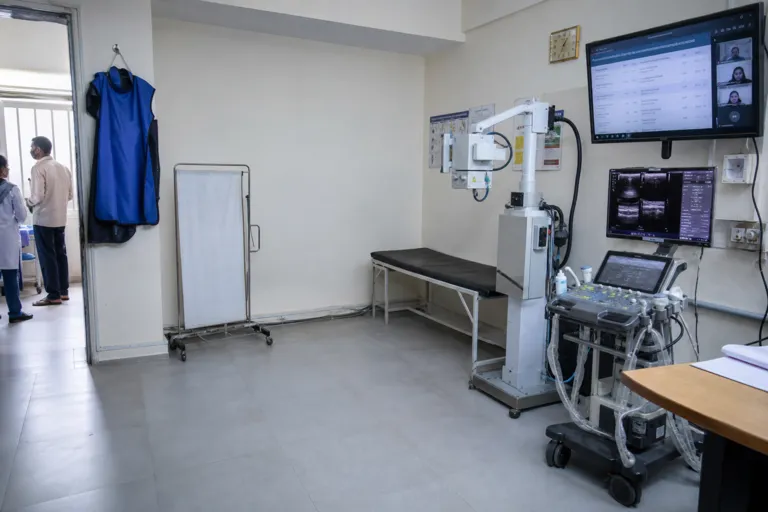
The shift toward rural and semi-urban screening is tied to two trends described together: portable imaging devices and digital connectivity. India’s medical imaging market coverage highlights rapid adoption of portable and point-of-care imaging solutions in rural and semi-urban regions with limited infrastructure. It also notes policy support for digital health platforms and telemedicine networks that extend diagnostic reach into rural areas where access to imaging specialists has historically been limited. At the same time, innovations in AI and machine learning are described as enabling automated image analysis, reducing diagnostic error rates, improving speed, and enhancing radiologist productivity and turnaround times across care settings.
Real-world screening examples illustrate how AI can be deployed in community settings and connected facilities. The MadhuNetrAI system screened 7,100 patients across 38 healthcare facilities for diabetic retinopathy in its first six months. Another case described is Niramai’s radiation-free, non-invasive breast cancer screening tool that uses thermal imaging and requires no specialist technician; the Thermalytix system that combines thermal imaging with AI analysis is operational in several Indian hospital chains and is described as deployable in community settings. Separately, AI-enabled tools integrated into the National TB Elimination Programme are associated with a 27% decline in adverse tuberculosis outcomes, showing how decision support can influence outcomes when scaled through programs and networks.
Behind the clinic-level impact is a fast-growing AI market focused on diagnostics, imaging, and telemedicine. India’s AI in healthcare market is valued at $791.2 million in 2025 and is projected to reach $4,529 million by 2030, at a 41.8% CAGR. A separate forecast for India’s AI in medical diagnostics market expects growth from USD 64.8 million in 2025 to USD 191.4 million by 2034, at a 12.72% CAGR. These projections align with reports that Indian institutions are deploying AI-driven tools for radiology, pathology, and medical imaging across tier-1, tier-2, and emerging tier-3 cities, with broader adoption expected in imaging, diagnostic automation, and telemedicine platforms between 2025 and 2030.
What is driving AI-supported diagnostic imaging adoption in India?
How does AI help move screening into rural and semi-urban clinics?
What are examples of AI screening programs already running in India?
How big is the growth outlook for AI in healthcare and diagnostics in India?
What does the AI Diagnostic Imaging India trend mean for rural screening capacity?