Across India, diabetes management is shifting from episodic finger-prick checks toward continuous, connected monitoring. This transition is visible in both device demand and digital services adoption. Grand View Research estimates the India digital diabetes management market generated USD 364.7 million in revenue in 2024 and is expected to reach USD 645.1 million by 2030, at a 10% CAGR from 2025 to 2030. In 2024, continuous blood glucose monitoring systems were the largest revenue-generating product, with a 44.26% revenue share, underlining how continuous monitoring is becoming central to modern care.
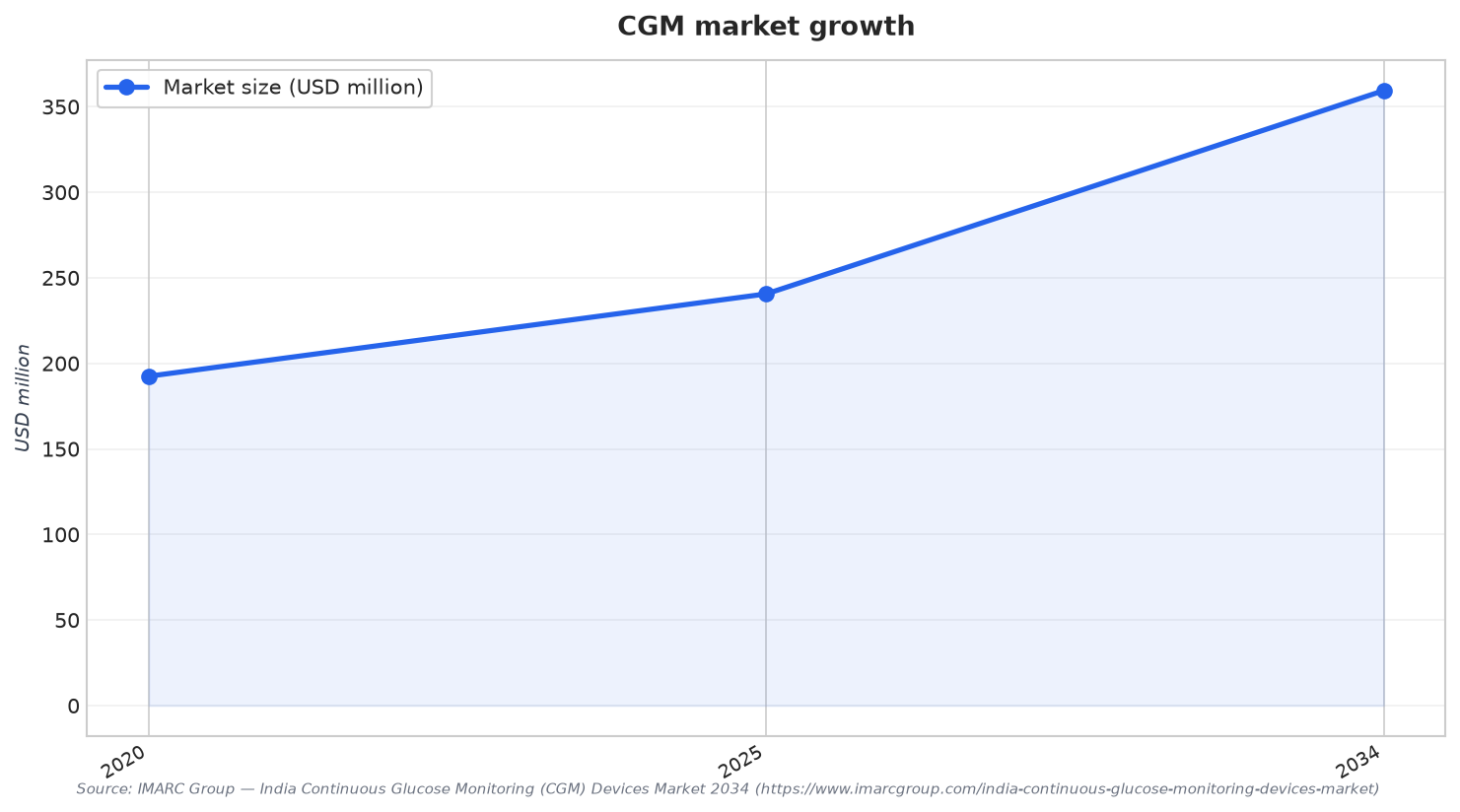
Device-market forecasts also reinforce the momentum. Grand View Research estimates the India continuous glucose monitoring (CGM) devices market at USD 45.92 million in 2025, projecting USD 105.67 million by 2033 at an 11.56% CAGR from 2026 to 2033. IMARC Group, using a different scope and methodology, estimates India’s CGM devices market reached USD 240.6 million in 2025 and is projected to reach USD 359.4 million by 2034, growing at a 4.56% CAGR during 2026–2034. Both views describe a market being fueled by proactive management and rising use of digital health tools, with expanding access via e-commerce, pharmacies, and digital health platforms.
Connected Sensors, New Launches, and Wider Access
CGM growth is also being shaped by product design and purchasing patterns. IMARC notes sensors held a dominant 68.4% component share in 2025, driven by frequent replacement; users replace sensors every 7 to 15 days depending on the product. Regionally, IMARC reports North India led with a 30.7% share, linked to Delhi-NCR’s concentration of diabetes specialist hospitals and higher-income urban demand. Product activity is accelerating too: IMARC cites Abbott’s August 2025 launch of FreeStyle Libre 2 Plus in India with minute-by-minute real-time monitoring, and Tracky’s June 2025 launch described as India’s first Bluetooth-enabled CGM.
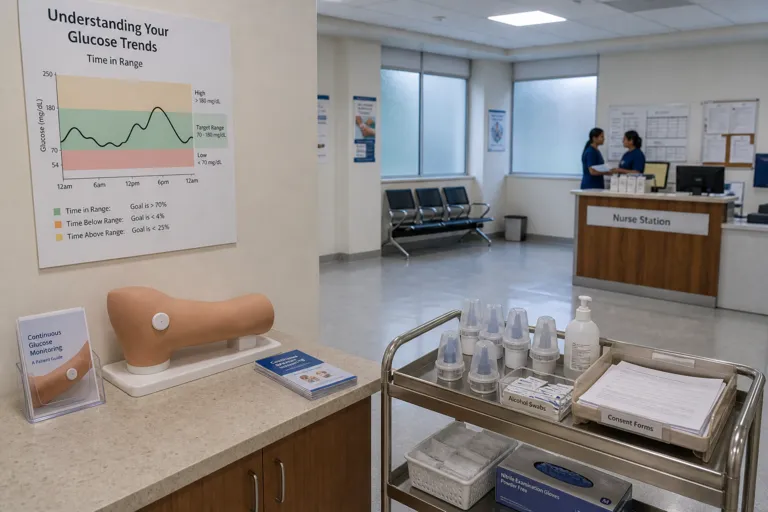
Behind the hardware, digital integration is becoming the differentiator for outcomes and user experience. Mobility Foresights notes healthcare providers are recommending CGM for better glycemic control and reduced hypoglycemic events, calling the shift toward continuous monitoring a change that is reshaping standard diabetes management practices. It also highlights real-time readings and trend analysis, plus integration with smartphones and smartwatches for accessibility. Grand View Research’s CGM market analysis similarly points to wireless connectivity enabling timely alerts and data-driven insights, with compatibility with telemedicine services contributing to growth.
The ecosystem is also evolving through partnerships and acquisitions, alongside a broadened consumer market. Grand View Research describes moderate to high M&A activity in India’s CGM market, driven by digital health integration, including global players expanding through partnerships with Indian firms and local activity such as BeatO (Health Arx Technologies Pvt. Ltd) acquiring healthtech companies to strengthen AI and analytics. It also notes that Indian startups such as DrStore, Ultrahuman, and Actofit are pioneering over-the-counter CGMs for fitness and preventive care. In this context, Diabetes Digital Care India is increasingly defined by connected devices, recurring sensor demand, and software-led support that can extend beyond clinic walls.
How fast is India’s digital diabetes management market projected to grow?
Which product segment led India’s digital diabetes management market in 2024?
Why do sensors dominate CGM component revenue in India?
What region leads India’s CGM devices market by share?
What is changing in Diabetes Digital Care India as continuous monitoring grows?