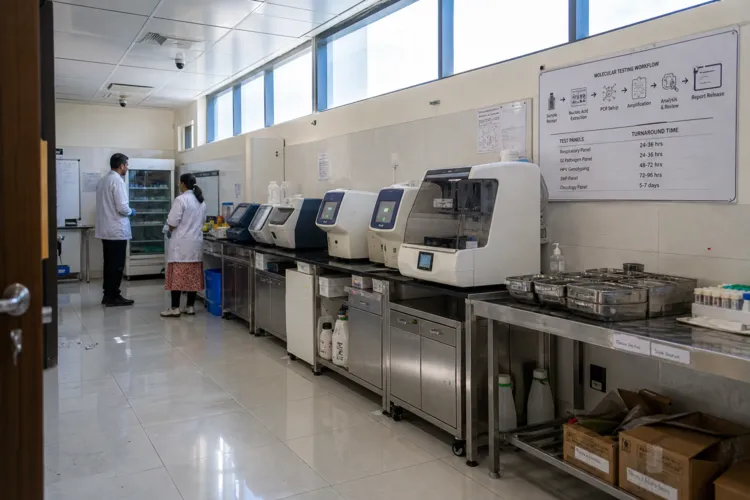

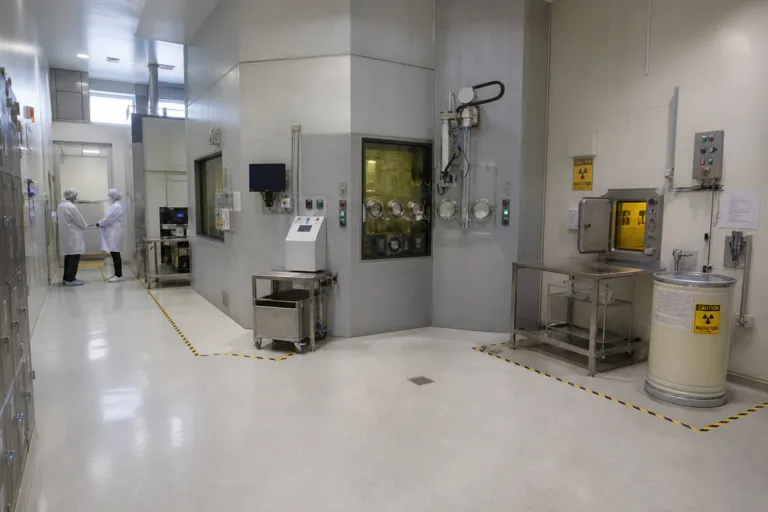
Radiopharmaceutical manufacturing in South Korea is scaling alongside faster adoption of nuclear medicine for diagnostics and therapy. Market Research Future projects the South Korea radiopharmaceuticals market to grow from USD Million 1250 in 2024 to USD Million 3500 by 2035, at a 9.81% CAGR from 2025 to 2035. The same source links this expansion to advancements in diagnostic imaging and increasing cancer prevalence, while also highlighting government support through funding initiatives for research and development. As healthcare providers expand nuclear medicine capabilities and upgrade imaging systems to accommodate advanced tracer technologies, demand rises for reliable production and distribution of radiopharmaceuticals used in PET and SPECT procedures.
South Korea’s broader diagnostics environment reinforces the manufacturing scale-up story. Grand View Research expects the cancer diagnostics market in South Korea to reach projected revenue of USD 6,324.0 million by 2033, with a 10% CAGR expected from 2026 to 2033. MarketsandMarkets notes that South Korea faces increasing prevalence of cancer, cardiovascular diseases, and neurological disorders, creating sustained demand for diagnostic and therapeutic nuclear medicine procedures. It also describes state-of-the-art medical facilities, high healthcare spending, and a strong regulatory framework that support rapid adoption of cutting-edge nuclear medicine technologies and radiopharmaceuticals, including growing demand for PET-CT imaging, radiopharmaceutical therapies, and hybrid imaging modalities.
Manufacturing Scale Meets PET/SPECT Demand—and Real Cost Barriers
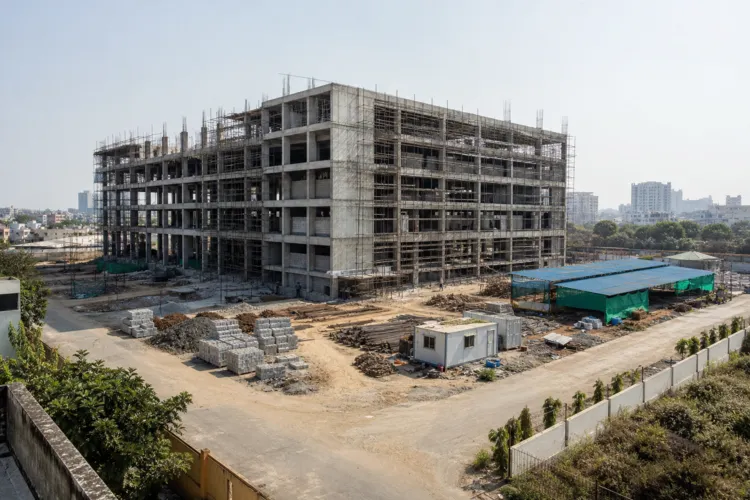
Scaling output is not just a demand story; it is a production and compliance challenge. DataIntelo highlights that good manufacturing practice (GMP)-compliant production facilities represent significant capital barriers in Asia Pacific, with construction costs exceeding $50-100 million per facility. The same report says South Korean and Japanese healthcare systems are expanding PET and SPECT imaging protocols, driving radiopharmaceutical consumption growth. It also states that oncology applications command the largest segment at approximately 42.6% of market value, reflecting the diagnostic challenge of cancer detection, staging, and treatment monitoring. As production scales increase, DataIntelo adds that PET radiopharmaceutical cost differentials are projected to narrow to 20-35% premiums by 2034.
Regional dynamics provide additional context for Radiopharmaceutical Manufacturing South Korea and its cancer diagnostics focus. DataIntelo projects Asia Pacific market share increasing from 18.4% in 2025 to 22-24% by 2034, describing the region as the fastest-growing and noting modernization of healthcare systems across China, India, Japan, and South Korea. Polaris Market Research also forecasts the Asia Pacific market to record a 10.2% CAGR from 2026 to 2034, attributing growth to rapid expansion of healthcare infrastructure across countries such as India, China, and South Korea. In the global radiopharmaceuticals market, Polaris reports USD 8.63 billion in 2025 value and notes technetium-99 held the largest market share at 26.0% in 2025, driven by widespread use in SPECT imaging for bone, cardiac, and oncology diagnostics.
For cancer diagnostics specifically, South Korea’s growth outlook suggests that manufacturing scale and supply reliability will remain strategic priorities. Market Research Future frames opportunities in high-specificity radiopharmaceuticals that support targeted therapies and align with precision medicine. MarketsandMarkets adds that government initiatives supporting precision medicine and early disease detection further accelerate market penetration, while hospitals and clinics are positioned as primary end users in Asia Pacific due to investments in advanced medical technologies, according to Polaris. Together, these signals point to a healthcare environment where expanding diagnostic imaging volumes and oncology-driven utilization translate into stronger requirements for compliant production, stable distribution, and ongoing innovation in radiopharmaceutical development.
What growth is projected for South Korea’s radiopharmaceuticals market?
How does cancer diagnostics growth relate to radiopharmaceutical demand in South Korea?
What is a key manufacturing barrier when scaling radiopharmaceutical production?
Which applications take the largest share in radiopharmaceutical diagnostics value?
How is Radiopharmaceutical Manufacturing in South Korea positioned within Asia Pacific growth?