
India’s hospital sector is moving into a new phase of network build-out, where Tier-2 city expansion is becoming a core growth lever. Industry estimates differ by source, but they point in the same direction: a fast-rising market and more organized delivery. Industry Today values the India hospital market at USD 193.42 Billion in 2025 and projects USD 364.55 Billion by 2034 at a 7.30% CAGR. IMARC projects the market reaching approximately USD 275.11 Billion by 2030. Alora Advisory estimates approximately US$110.0 billion in 2024 and projects US$225.0 billion by 2030 at about 12.8% CAGR. Against this backdrop, the strategic story is less about one number and more about where capacity is being added next.
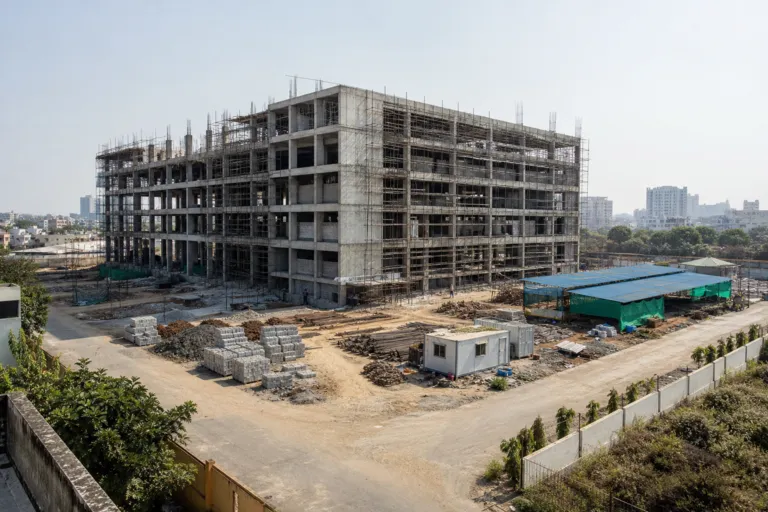
Multiple sources describe Tier-2 and Tier-3 expansion as an increasingly important destination for capital. IMARC links growth to corporate chains commissioning new beds in Tier-2 and Tier-3 cities and to PMJAY-driven patient volumes, especially as private hospitals gain admissions momentum in smaller cities. It also frames Tier-2 and Tier-3 hospital network expansion as a primary capital deployment opportunity and notes private equity capital has demonstrated 3–5x return potential from hospital chain investments, with listed chains offering liquid exit pathways. KPMG adds that consolidation is intensifying, with standalone and single-region players being acquired by regional and national chains, and that larger chains are aiming to solidify presence particularly in Tier-2 and Tier-3 cities. Together, these signals reinforce why hospital networks are repositioning beyond metros.
Where Tier-2 Demand Is Concentrating—and Why It Matters
City selection is getting more surgical, not broader. InsightRx’s “Catalyst Map” argues India’s growth story is no longer only a metro story, identifying 22 Tier-2 and Tier-3 cities where demand is outpacing supply. It names the highest-opportunity Tier-2 cities for healthcare investment as Jaipur, Lucknow, Indore, Bhopal, Nagpur, Coimbatore, Visakhapatnam, Patna, Vadodara, and Surat. The research base is explicit: primary research across 22 cities between April and June 2026, including outpatient volume audits at 180+ facilities, 96 structured interviews, insurance enrollment data analysis, infrastructure mapping, and surveys across 640 respondents. The report also ties demand to three structural forces: rising household incomes and willingness to pay, expansion of government and corporate insurance schemes, and growing awareness of organized care via digital media and urban migration patterns.
Economics, however, can vary sharply by micro-market, which is why chains are pairing expansion with more disciplined capacity decisions. InsightRx notes leading chains report ₹45,000–70,000+ ARPOB per day in metro tertiary facilities, but adds that “genuinely investable whitespace” for 200+ bed multispecialty hospitals concentrates in a smaller set of cities than simple bed-gap arithmetic implies. It highlights three conditions that must coexist: paying capacity, clinical talent, and case-mix depth. The same report estimates India’s hospital market at US$ 110–130 billion in FY26, growing at 8–10% CAGR, and states India has roughly 1.5–1.6 hospital beds per 1,000 population against a global benchmark of ~3—while cautioning that the bed gap is a public-health statistic, not an investment thesis. This is shaping how chains stage projects and prioritize specialties.
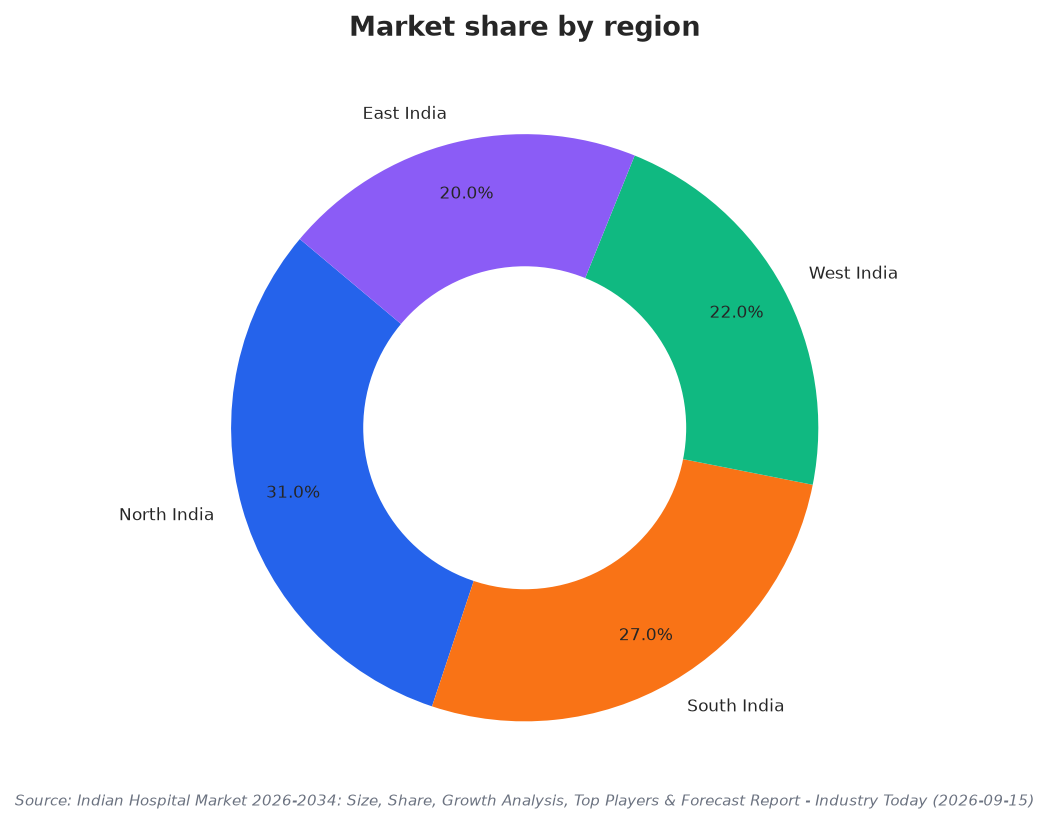
In this environment, Hospital Chain Expansion India strategies increasingly blend consolidation with targeted greenfield and capability upgrades. Alora Advisory describes mergers, acquisitions, and network expansion as primary growth levers, while also pointing to East and Central India as underpenetrated and positioned for the next phase of expansion via Tier II and Tier III investments. IMARC’s regional breakdown adds context, noting North India’s Ayushman Bharat implementation across Uttar Pradesh, Rajasthan, Madhya Pradesh, and Haryana is creating significant private hospital empanelment revenue, while it characterizes East India’s 20% share as reflecting a large healthcare deficit being progressively addressed by private hospital chain expansion. The playbook, as described across sources, is clear: pick the right Tier-2 micro-markets, build scalable networks, and align capacity with payer and clinical realities.
What is driving hospital expansion into Tier-2 and Tier-3 cities in India?
Which Tier-2 cities are highlighted as high-opportunity for healthcare investment?
How large is India’s hospital market according to the sources?
What do sources say about investment returns in hospital chains?
How are Hospital Chain Expansion India strategies changing in Tier-2 markets?