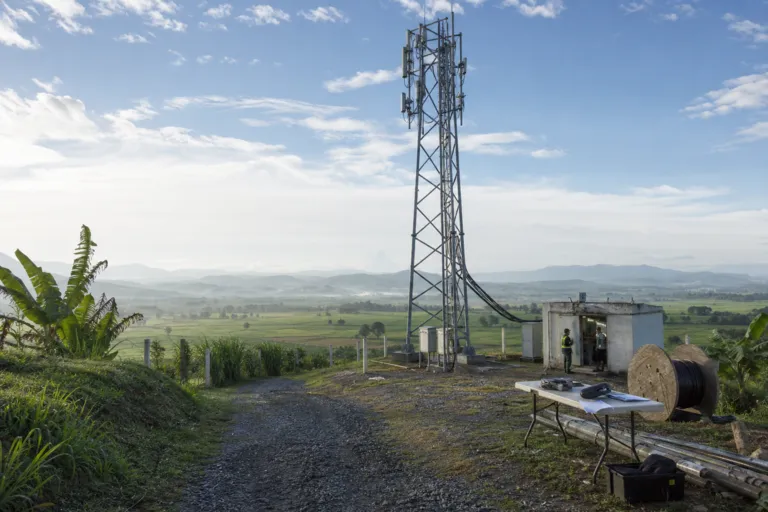
Nationwide connectivity is becoming a practical requirement for modern care delivery in the Philippines, because more services now depend on stable internet and data exchange. The country’s digital health ecosystem is being shaped by demand for telemedicine solutions, electronic health records, and health information exchange systems, with growth also linked to smartphone adoption, internet penetration, and government support for digital health initiatives. Urban centers such as Metro Manila, Cebu, and Davao are described as dominant areas for digital health adoption due to stronger healthcare infrastructure and wider internet connectivity, while rural regions remain behind because of limited infrastructure and access to high-speed internet.
Market signals point to rapid expansion in connected healthcare, which relies on networks that can support real-time monitoring and remote services. One connected healthcare market estimate reported a size of USD 510.9 Million in 2025, with a projection to reach USD 5,570.1 Million by 2034, reflecting a CAGR of 29.49% during 2026–2034. This segment includes telemedicine, wearable devices, mobile health applications, and cloud-based platforms that enable remote diagnosis and monitoring. The country’s geography, described as comprising over 7,000 islands, reinforces the need for remote healthcare options to reach underserved areas where in-person access can be difficult.
Connectivity Plans Meet On-the-Ground Rural Constraints
Policy direction is also shifting toward broad network availability. In January 2026, the Philippines approved its first National Digital Connectivity Plan, described as aiming to expand fast, affordable broadband infrastructure and ensure nationwide internet access by 2028. That matters for health systems because cloud-based platforms and remote monitoring tools work best when connectivity is stable. At the same time, the rural baseline remains a barrier: one report citing the Philippine Statistics Authority stated that only 30% of rural health facilities have access to reliable internet connectivity. Closing that gap is central to making remote consultations and data-driven care practical outside major cities.
Within the broader digital health market, telemedicine has been described as dominating by product type because it can extend access to remote areas and reduce the burden on in-person consultations. The same overview also notes that cloud-based solutions hold a dominant share by platform type, tied to scalability, cost efficiency, and the shift toward remote healthcare. Cloud platforms are positioned as enabling secure remote storage, access, and analysis of patient data, supporting collaboration and real-time updates. This combination matters for Digital Health Infrastructure Philippines initiatives, because it links broadband and hosting architecture to practical workflows, such as virtual consultations, follow-up care, and remote health monitoring.
Remote patient monitoring (RPM) adds another layer of infrastructure needs, from connected devices to analytics dashboards. One projection stated that the Philippines digital health and remote patient monitoring market is projected to grow around USAD 3.6 billion by 2032, at a CAGR of 13.2% during the forecast period. The same source describes RPM using wearable sensors, home monitoring devices, mobile apps, connected implants, and cloud-based monitoring platforms, with data such as vital signs, glucose levels, cardiac rhythms, and activity metrics captured continuously or periodically. As connectivity improves under the national plan, these models can move from pilots and urban-heavy adoption toward more consistent availability across locations with historically weaker internet access.
What is driving the shift toward nationwide-connected healthcare in the Philippines?
What does the National Digital Connectivity Plan target, and by when?
How big is the rural internet gap for health facilities?
What market figures show momentum for connected healthcare in the Philippines?
How is Digital Health Infrastructure in the Philippines linked to cloud and remote monitoring?