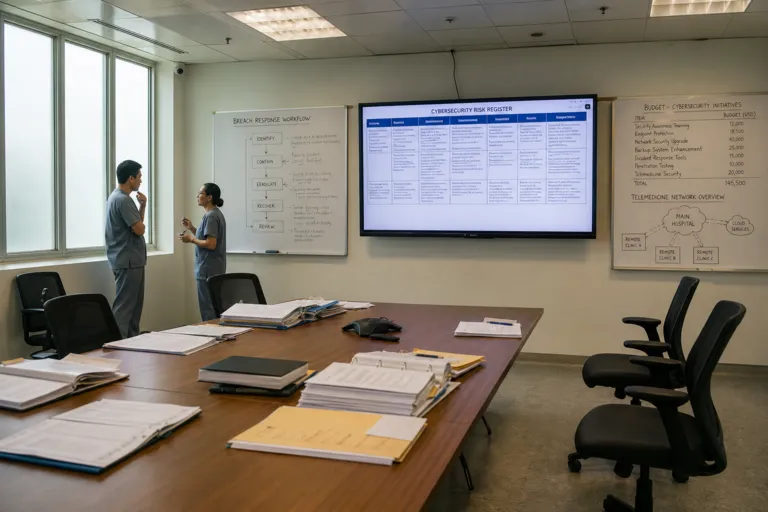
Board agendas are changing as digital care expands and the operational impact of cyber disruption becomes clearer. One market analysis notes that ransomware attacks surged 37% compared with 2024, and HIPAA Journal documented over one million compromised healthcare records within a single reporting period; in that same context, the report frames cybersecurity as shifting from an IT line item to a board-level strategic priority. For Southeast Asia, this global signal matters because Asia-Pacific is described as the fastest-growing region, driven by rapid adoption of digital healthcare technologies, expanding telemedicine coverage, and active government programs to build cybersecurity capacity across healthcare networks.
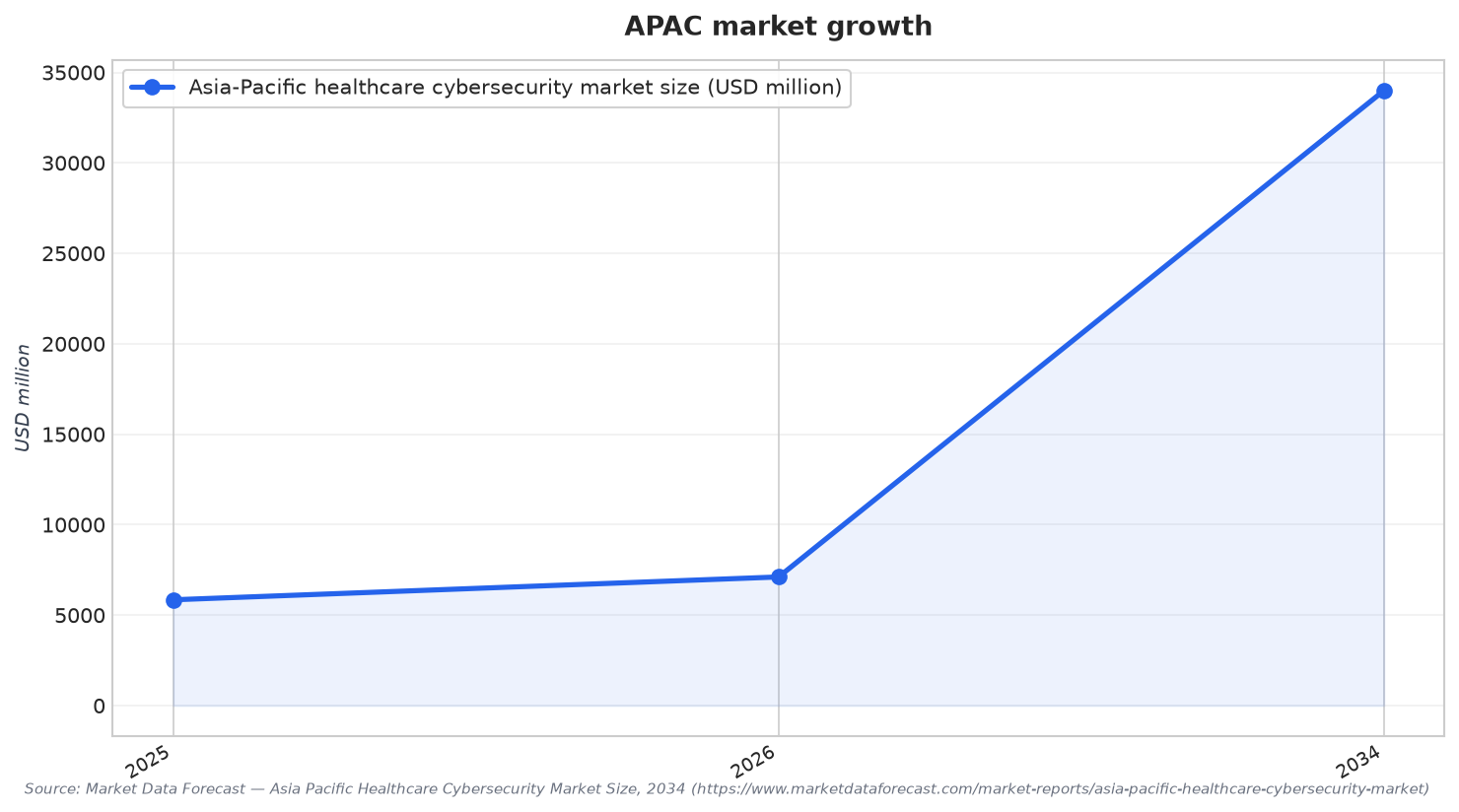
Spending trajectories support the governance shift. The Asia-Pacific healthcare cybersecurity market was valued at USD 5,848 million in 2025, estimated at USD 7,111 million in 2026, and projected to reach USD 33,995 million by 2034, representing a 21.6% CAGR from 2026 to 2034. These are regional figures, but they set the investment backdrop for Healthcare Cybersecurity Southeast Asia as boards look for clearer risk ownership and measurable outcomes. The same Asia-Pacific report links growth to escalating cyber threats, rapid digital transformation, and government initiatives enforcing data security laws and compliance standards, which naturally raise executive and board scrutiny.
What Boards Are Asking for: Governance, Proof, and Resilience
Boards increasingly want governance structures that match the complexity of modern healthcare environments. A global market forecast highlights how national systems respond differently: Japan assigns formal cybersecurity responsibilities within healthcare organizations, while Germany emphasizes information-system assurance requirements embedded in hospital procurement and operating frameworks. In Japan, the MHLW reported in May 2026 that 86% of hospitals had appointed a security manager, but only 16% had personnel holding an information-processing qualification. That gap illustrates why leadership teams push for clearer accountability, more specialist support, and practical programs that can be audited and sustained, especially when clinical operations depend on shared identities, networks, and connected devices.
Vulnerability management is another board-facing control because it can be documented and tracked. A healthcare vulnerability scanning report states that Asia Pacific emerged as the fastest-growing region and commanded 32.5% of the global healthcare vulnerability scanning market in 2025, driven by rapid healthcare digitalization across India, China, Japan, and Southeast Asia. The same source says vulnerabilities in healthcare IT systems remain unpatched for an average of 187 days after public disclosure, creating extended exploitation windows for attackers. It also places the financial impact of healthcare data breaches at an average of $10.7 million per incident, including regulatory fines and remediation costs, which is the kind of risk framing that boards understand and act on.
Country-level momentum reinforces the regional narrative. Vietnam’s healthcare cybersecurity market was USD 140.69 million in 2025 and USD 196.19 million in 2026, and is forecast to reach USD 1,124.26 million by 2035 at a 21.41% CAGR. The same Vietnam market analysis ties spending to patient care continuity and growing EMR adoption, noting that buyers are strengthening segmentation, logging, and incident response. It also observes that organizations are expanding approaches such as zero trust, managed response, and device protection as digitization accelerates. For board members, these signals translate into a simple mandate: fund resilient operations, demand measurable controls, and treat cyber readiness as part of clinical performance.
Why is healthcare cybersecurity becoming a board-level priority in Southeast Asia?
What Asia-Pacific market figures support increased cybersecurity spending?
What do governance examples from other countries show boards should focus on?
How do vulnerability and patching timelines influence board decisions?
What does Vietnam’s market outlook suggest about Healthcare Cybersecurity Southeast Asia priorities?